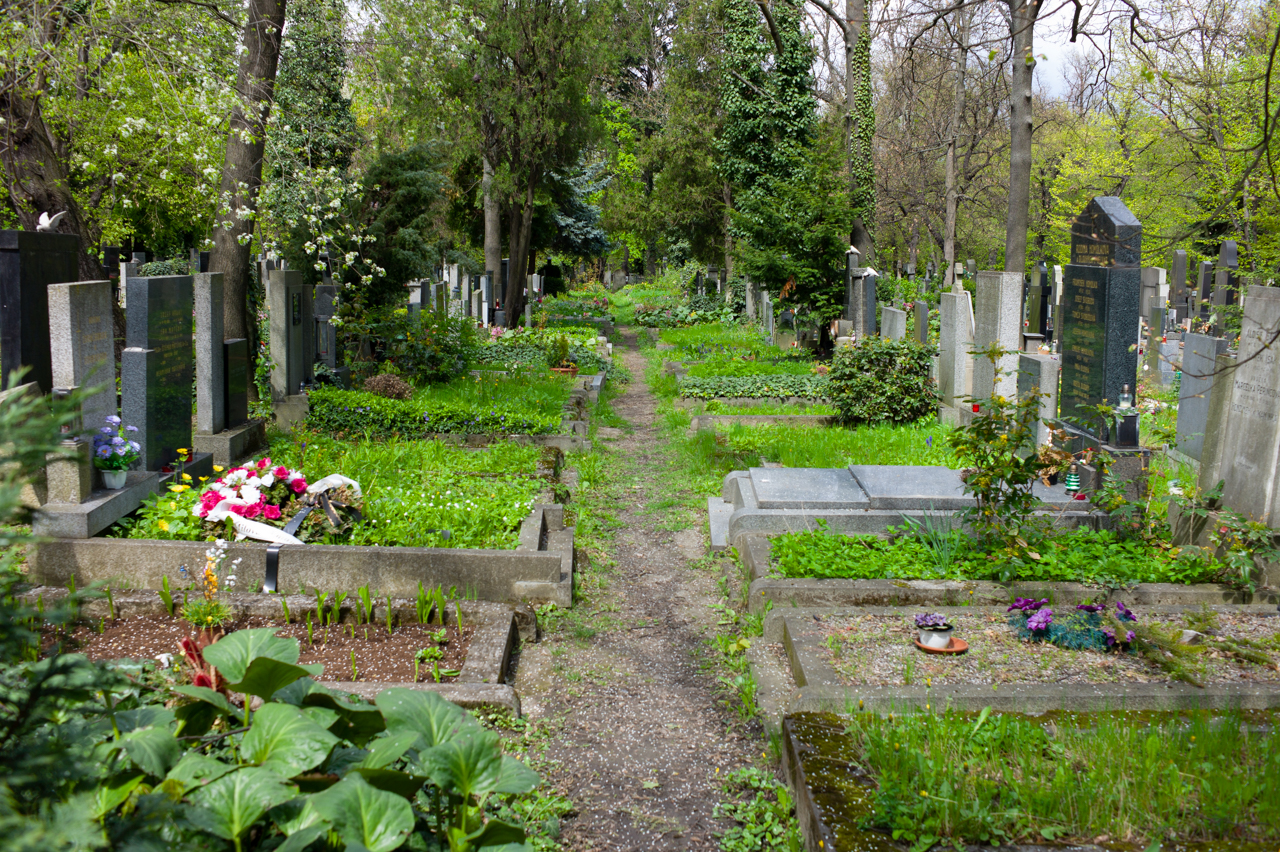
Established in 1680, the complex of cemeteries at Olšany, on the borders of Vinohrady and Žižkov, is the largest in the Czech Republic. According to Wikipedia “there is evidence of 230,000 people buried, 65,000 grave sites, 200 chapel graves and six columbariums in Olšany Cemeteries.”


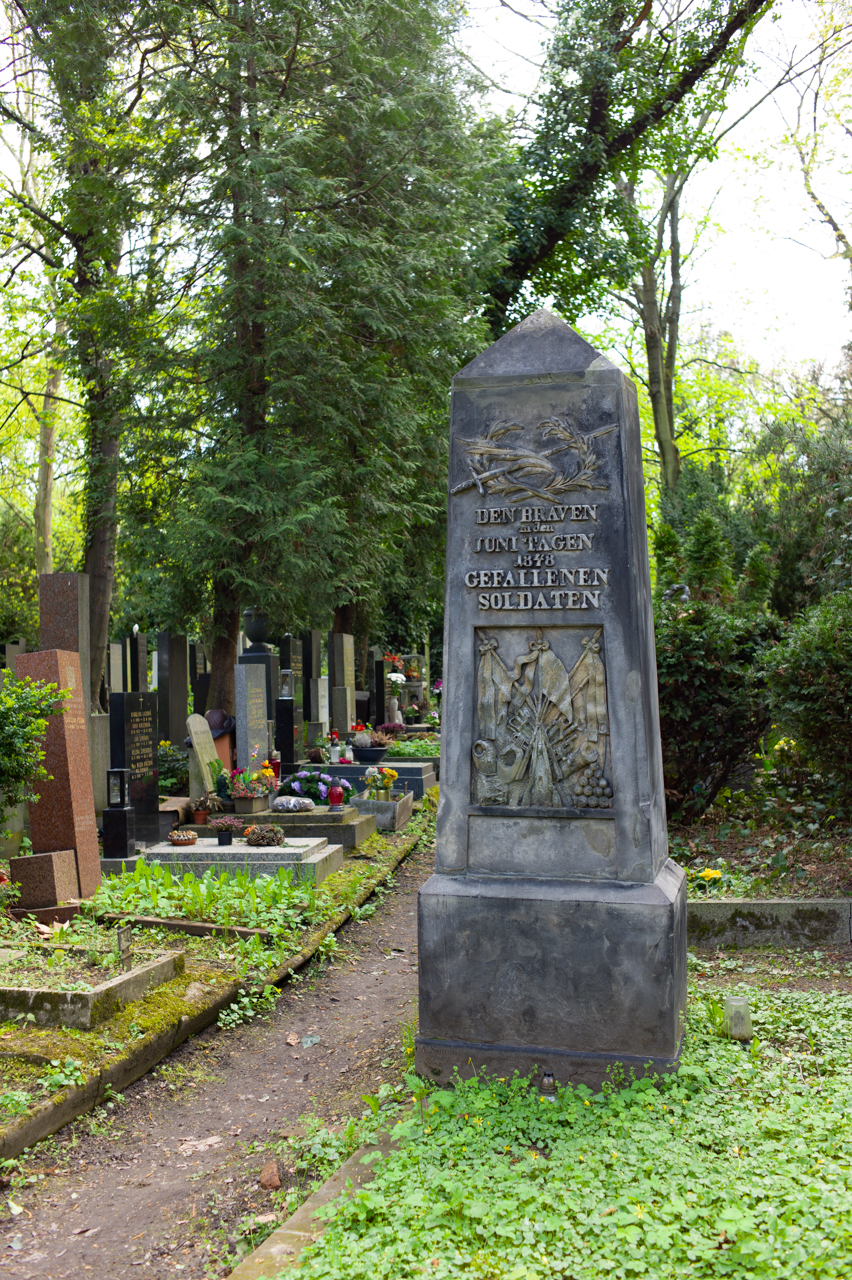
Many famous Czechs (and Slovaks) are buried here. But Prague has never been entirely Czech. Image #5 above shows the last resting place of Austrian soldiers who died during the revolutionary “June Days” of 1848, when the forces of Field Marshal Alfred I, prince of Windischgrätz, shelled the Old Town from the walls of Prague Castle to restore imperial order.
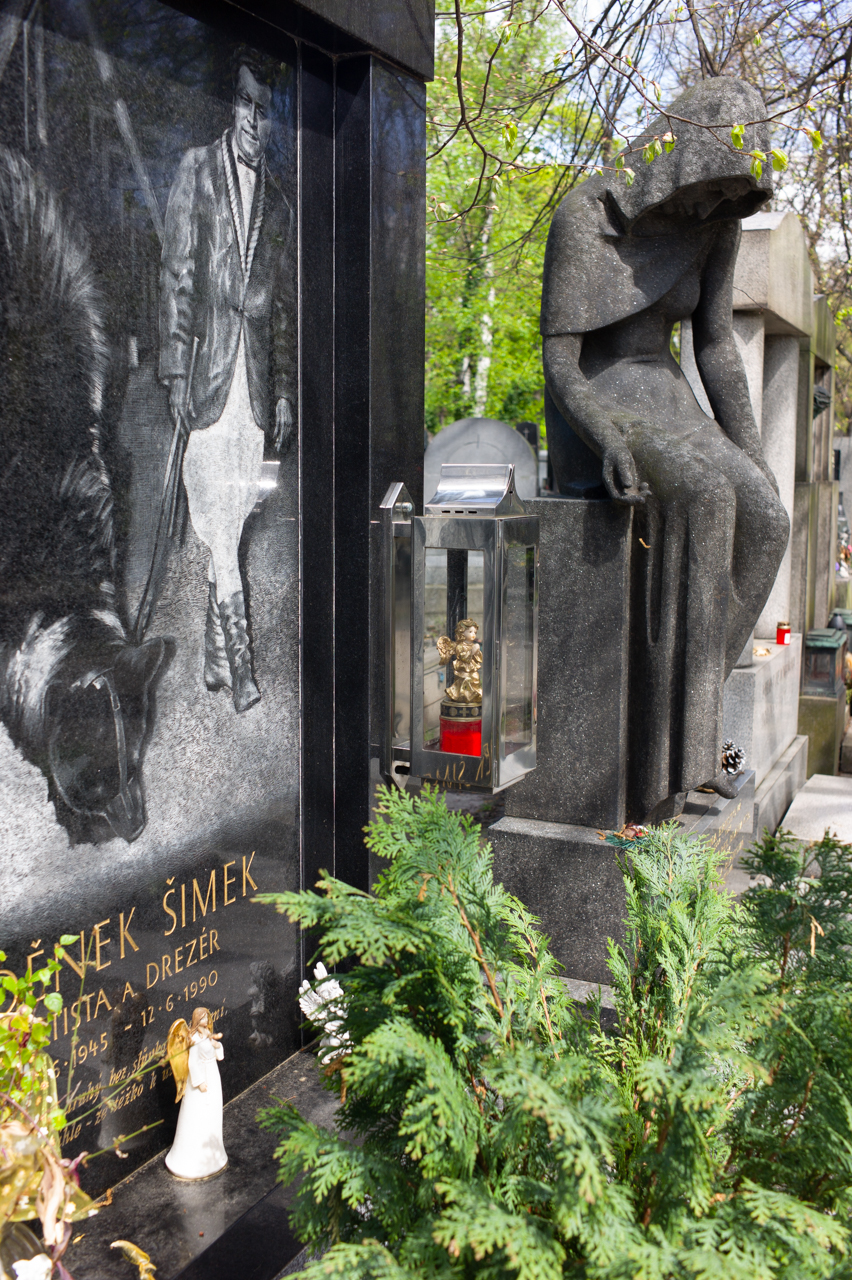
Inscriptions on many of Olšany’s older graves are in German. For me, each is a punctum that in Roland Barthes’ words “rises from the scene, shoots out of it like an arrow, and pierces me” (Camera Lucida), fracturing the taken for granted studium of its present-day Czech surrounds.
These are not the only surrealities that punctuate Olšany’s tranquility.
Klement Gottwald
The graves of Communist Party leader and “first workers’ president” Klement Gottwald, together with around twenty other communist luminaries, are also in Olšany. All were at first interred in the National Monument on Vítkov Hill, a building honoring the Czechoslovak Legions of World War I. The communists hijacked the monument after their 1948 coup d’etat as a mausoleum for “the greatest sons of our working class.”
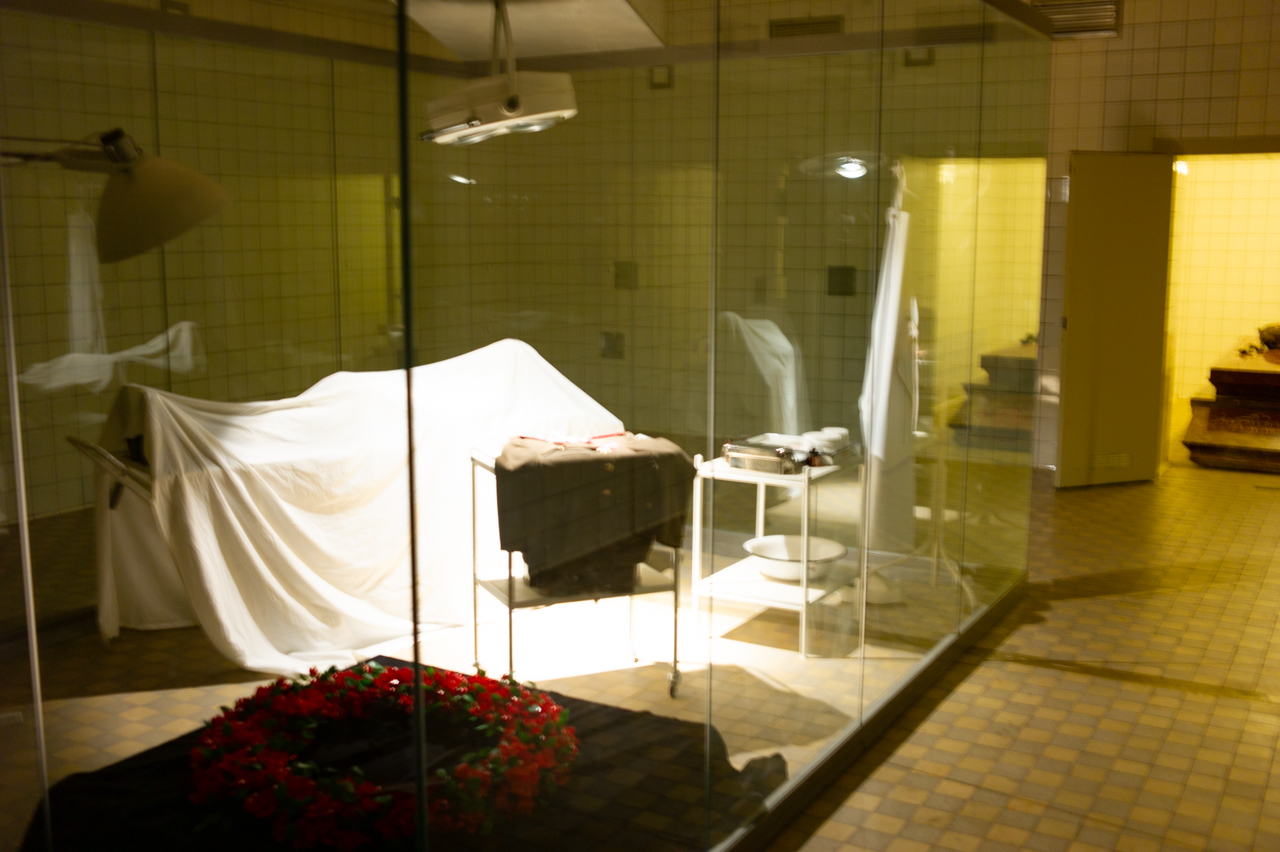
When Gottwald died in 1953 his body was embalmed and put on public display in faithful imitation of Lenin. But the corpse began to decay, and a team of specialists worked nightly in a “hospital” beneath the National Monument to make the mummy endure (image #5 below). Gottwald’s body was finally cremated in 1962, and his ashes placed in a red marble sarcophagus in the mausoleum’s central hall.
After the Velvet Revolution ended communist rule in November 1989 the sons of the working class were unceremoniously relocated to Olšany.
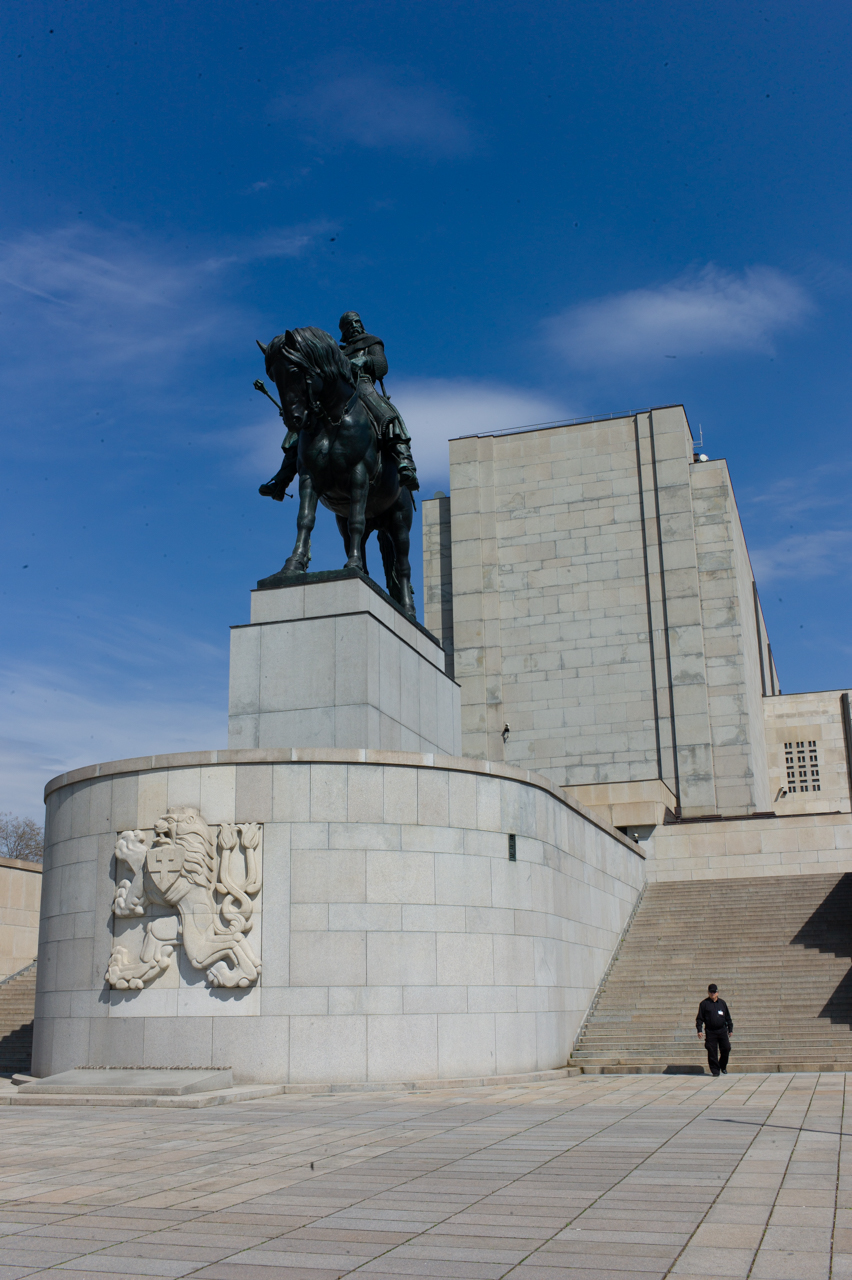
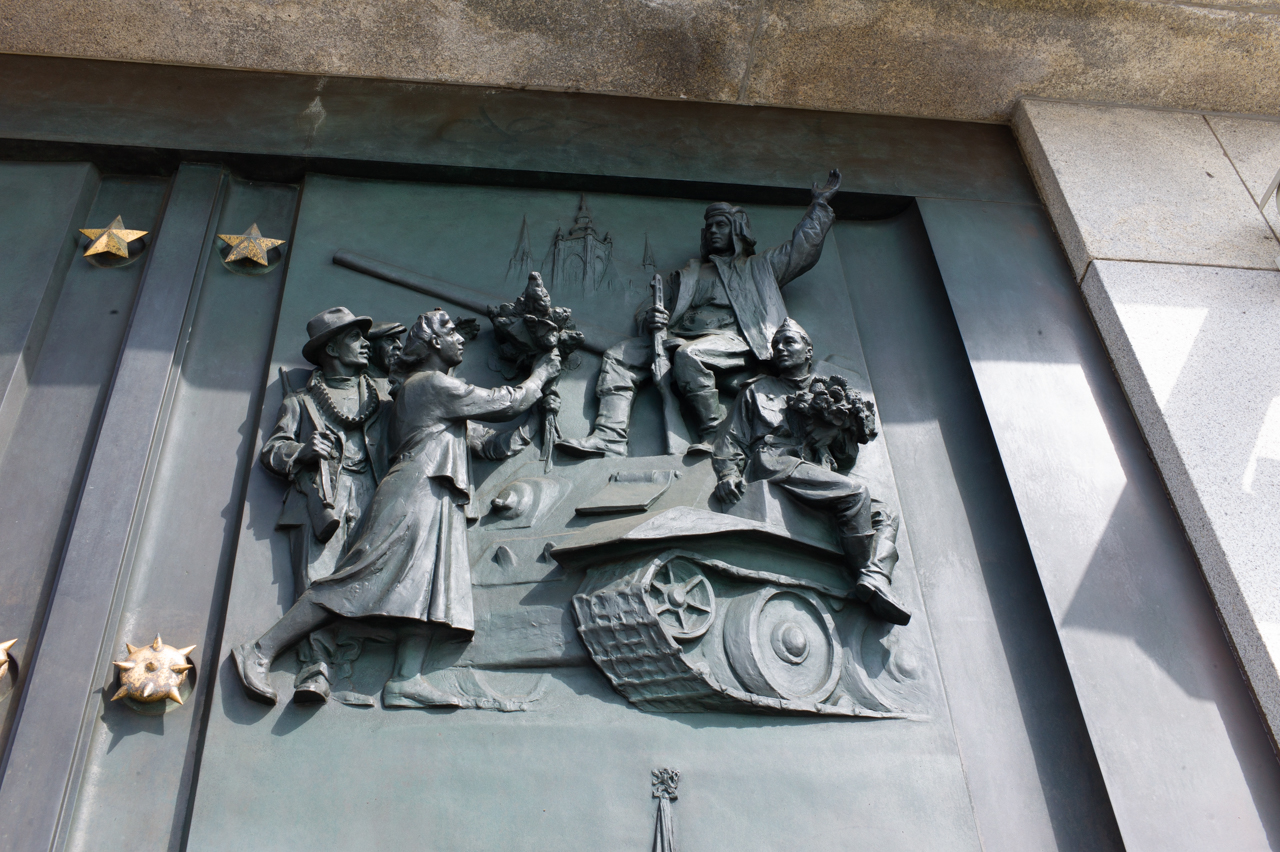


The National Monument on Vítkov Hill (Alois Zázvorka, 1926-33). Bohumil Kafka’s equestrian statue of Jan Žižka was installed in 1950.
Jan Palach
In protest against the Soviet invasion of 21-22 August 1968, Jan Palach, a twenty-year-old Charles University history student, burned himself to death on Wenceslas Square on 16 January 1969. Over 200,000 people filled the streets of Prague for his funeral.
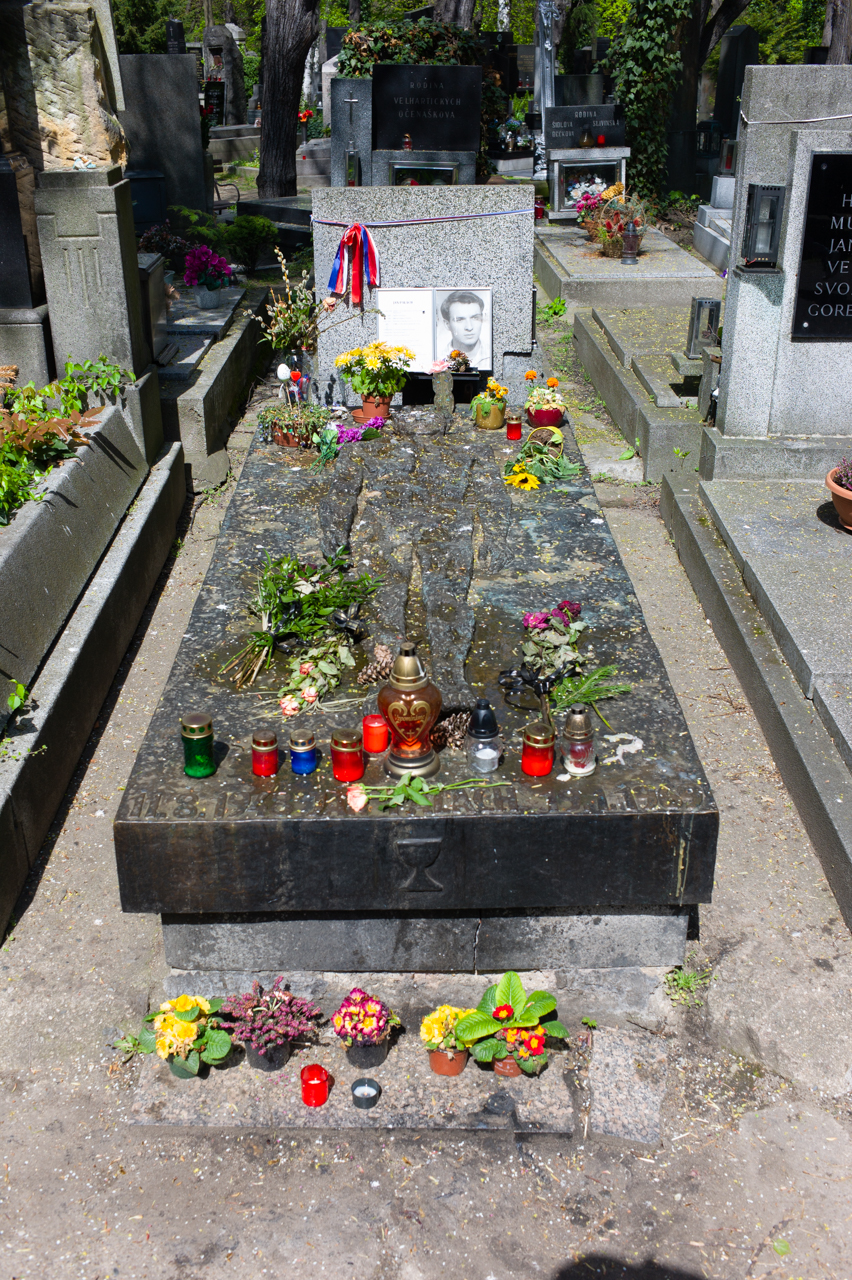

Palach’s Olšany grave became a pilgrimage site, with visitors festooning it with flowers and candles. One night in July 1973 the secret police bribed two gravediggers with a couple bottles cognac to exhume Jan’s remains. His body was cremated and the ashes returned to his family in the little town of Všetaty, where there is now a Palach memorial.
Jan’s ashes were returned to his original resting place in Olšany in 1990.
The Liberated Theater
Olšany is also the final resting place of JiřI Voskovec and Jan Werich, the stars of Prague’s celebrated Liberated Theater (Osvobozené divadlo); Jaroslav Ježek, the theater’s resident composer; and the writer, artist, and caricaturist Adolf Hoffmeister, who supplied many of its stage sets and posters as well as co-authoring some of Vokovec and Werich’s reviews.
The perpetual smiles into which Voskovec and Werich’s names are carved on their headstones cover up rather a lot.

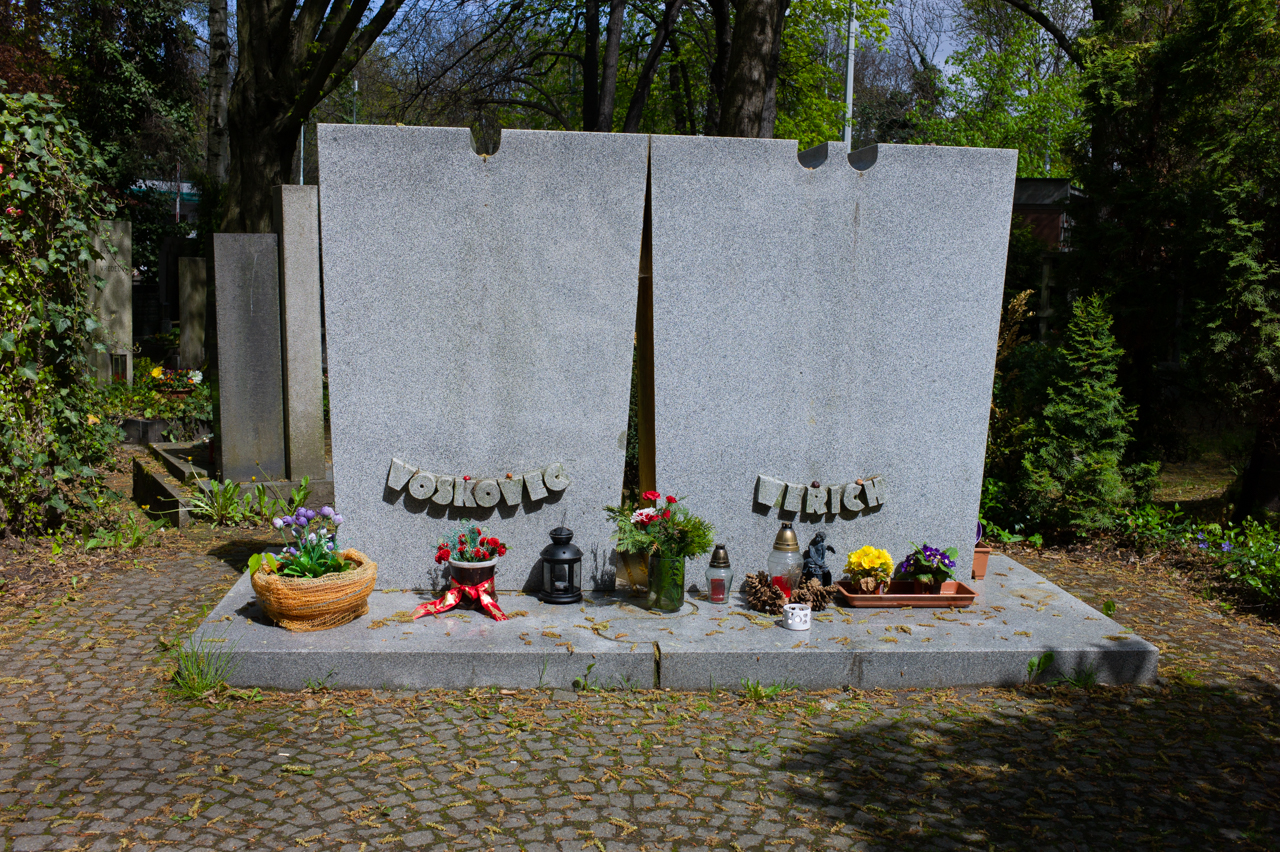
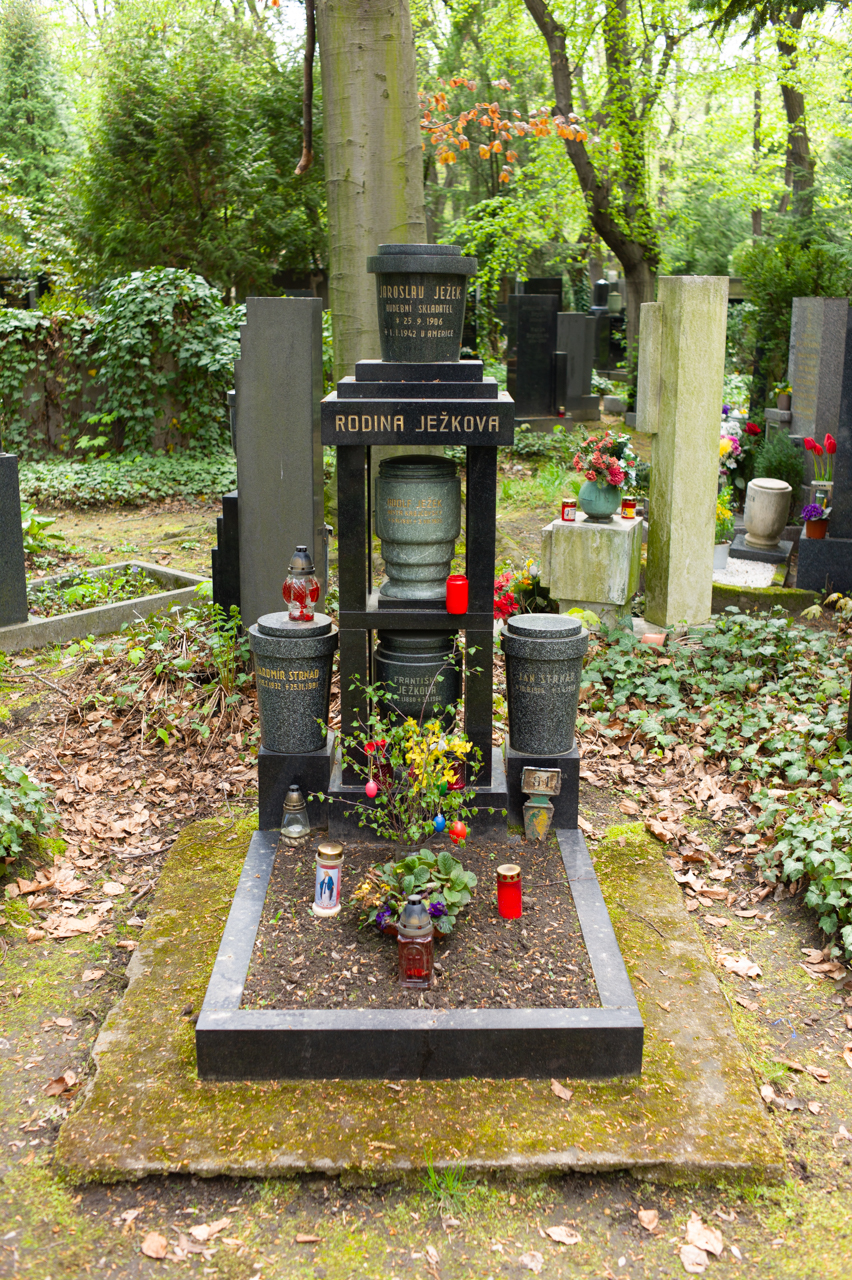
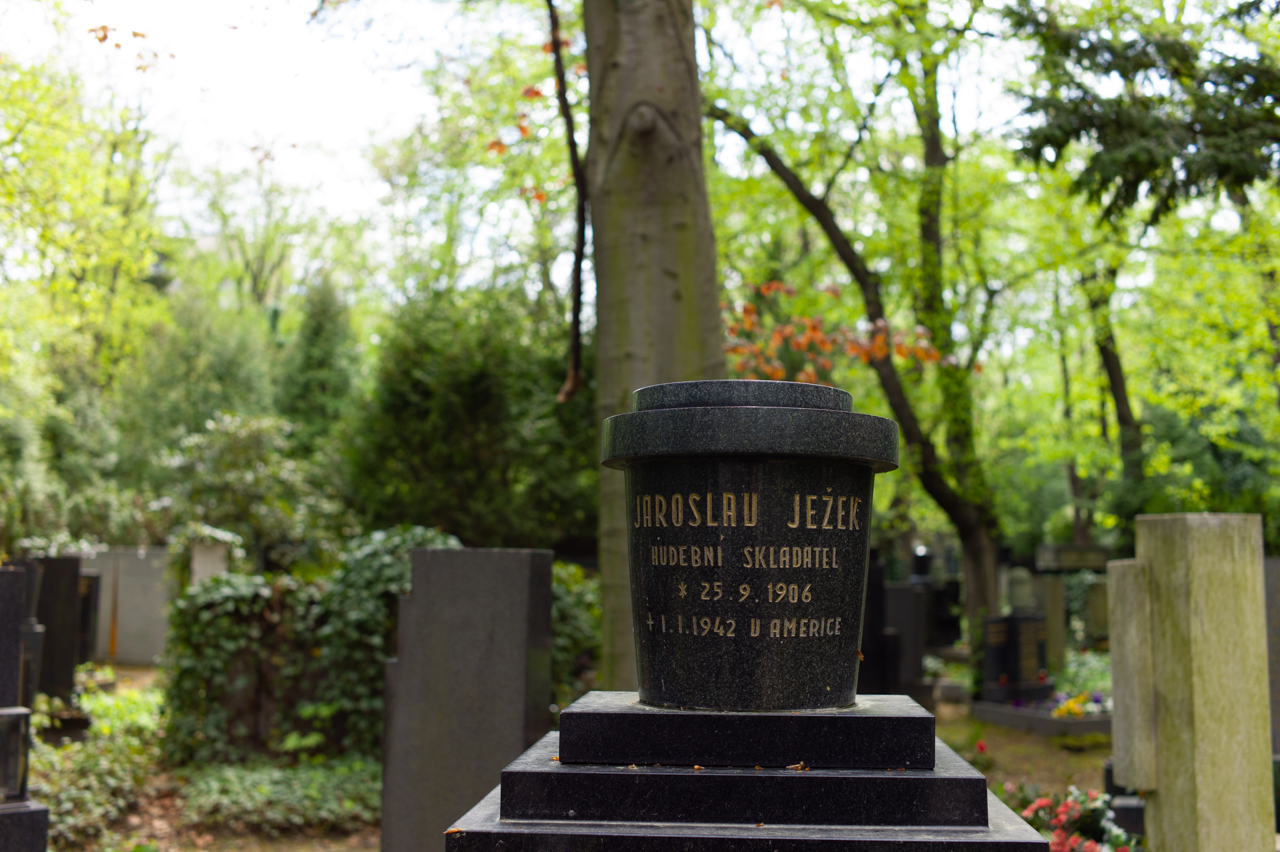
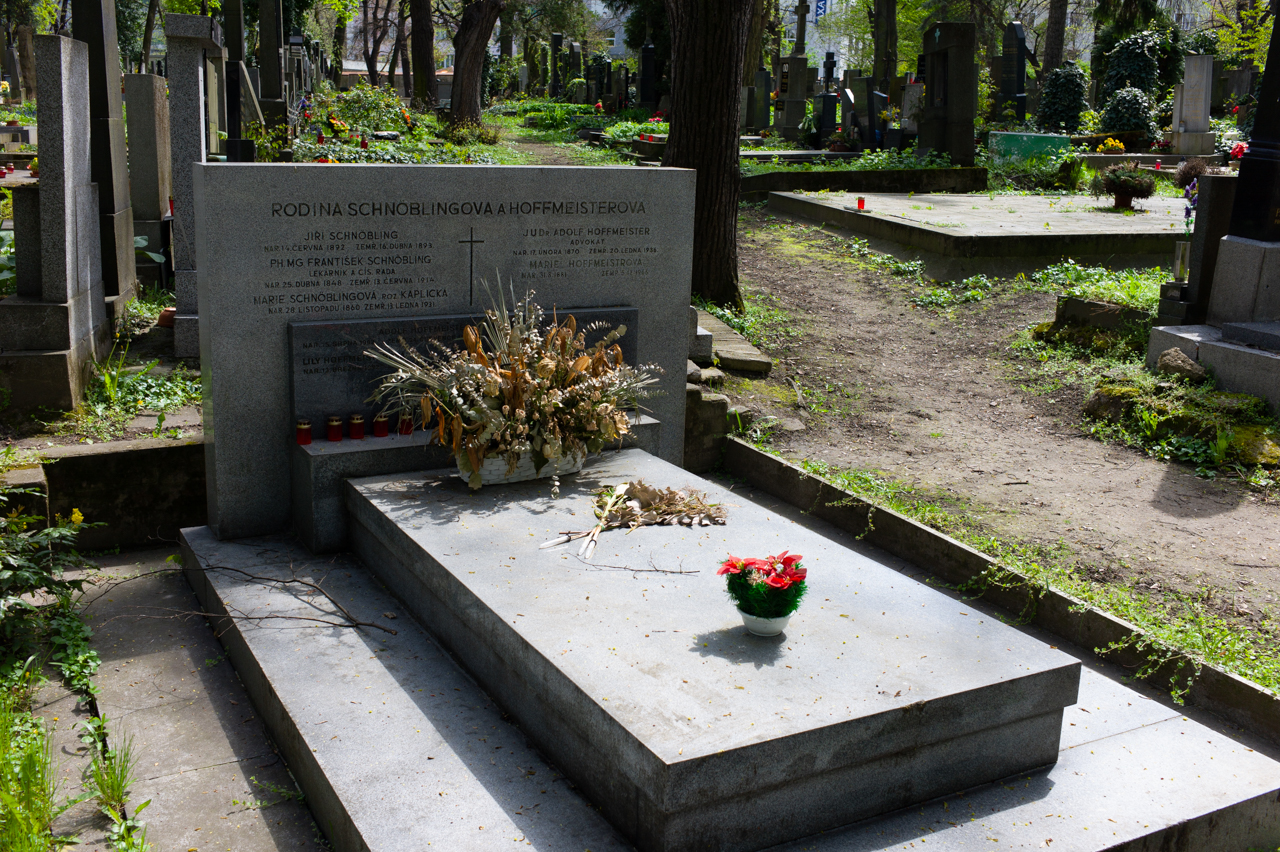
#1-2 Jiří Voskovec + Jan Werich (“V + W”) #3-4 Jaroslav Ježek #5 Adolf Hoffmeister
The Liberated Theater entertained thousands of Praguers from 1929 to 1938 with jazz, political satire, avantgarde stagecraft, and Joe Jenčík’ Girls. It was closed down after the Munich Agreement killed Czechoslovak democracy in September 1938. Voskovec, Werich, and Ježek left for New York in December. Hoffmeister fled to France after the German invasion of March 1939, then made his way via Casablanca and Lisbon to the USA.
Ježek died in New York on New Year’s Day 1942. His ashes were returned to Prague in 1947 and placed in the family grave in Olšany.
Voskovec, Werich, and Hoffmeister returned home after the war ended. Voskovec contrived to get himself posted to UNESCO in Paris, whence he sailed to the US again in 1950 and made a second career in film and theater under the name of George Voskovec. He died in Pearblossom, California, in 1981, and his ashes were repatriated to Prague in 1990.
Werich and Hoffmeister had successful careers in Czechoslovakia, but both fell foul of the “normalization” that followed the 1968 invasion and were subsequently excluded from public life.
Hoffmeister died in 1973, Werich in 1980. I have told Adolf Hoffmeister’s story here. Confounding the easy distinctions between collaboration and resistance, it deserves to be much better known.
“Always with a Smile” (Vždy s úsměvem) was a 1935 V + W review at the Liberated Theater.
This is the second of three posts on Prague cemeteries. The first is here, the third here.
 Camera lucida
Leave a comment