By modernity, I mean the ephemeral, the fleeting, the contingent, the half of art whose other half is the eternal and the immutable.
Charles Baudelaire, “The Painter of Modern Life”
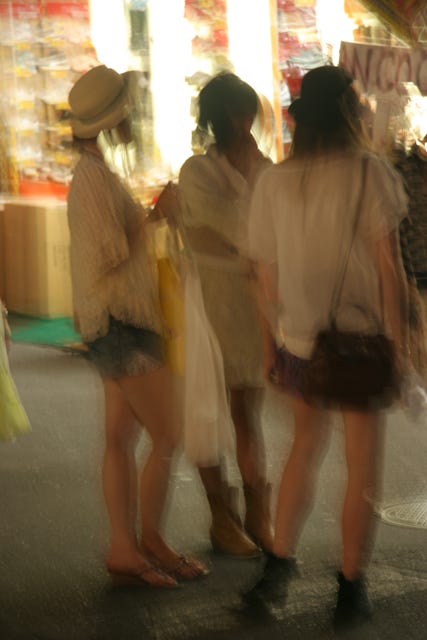
Photography is painting with light! The blurs, the spots, those are errors! But the errors are part of it, they give it poetry and turn it into painting.
Miroslav Tichý

Are-bure-boke questioned whether realism was possible. “Just one centimeter from the photographer’s reality,” Nakahira wrote, “is another reality beyond our imagination.” And responding to this provocation, a generation of photographers set out to reveal the artificial processes of their medium; and, through this self-referential act, allude what was beyond.
Ratik Asokan, “Are–bure–boke”
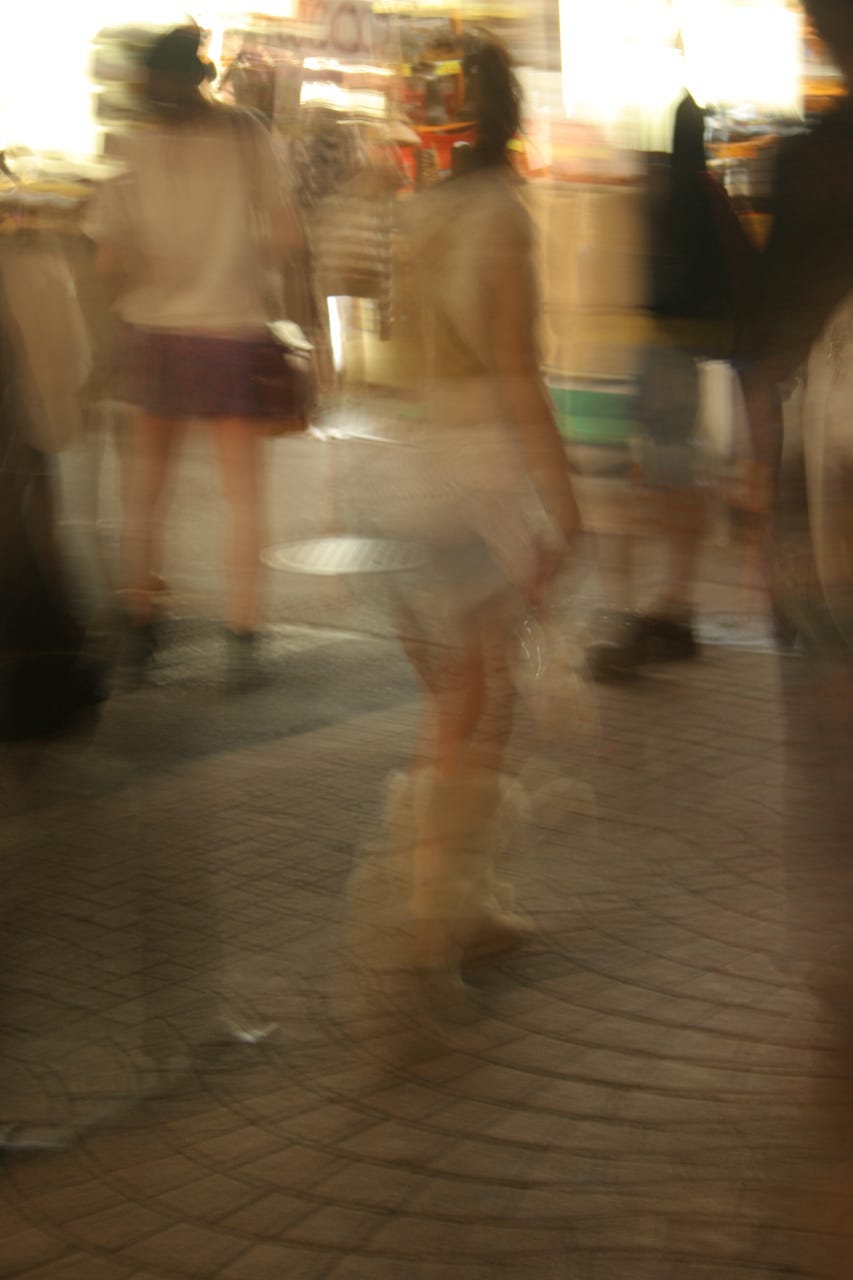
The inner model is not an autonomous product of our subconscious, but it is the projection of the movement of objective reality within us … not a rigid and dead set of facts surrounding our unsteady subjects, but reality as seen through the whole of our body, the reality of existence, of nothingness, the reality of consciousness.
Mikoláš Medek and Emila Medková, responses to an “Inquiry on Surrealism”
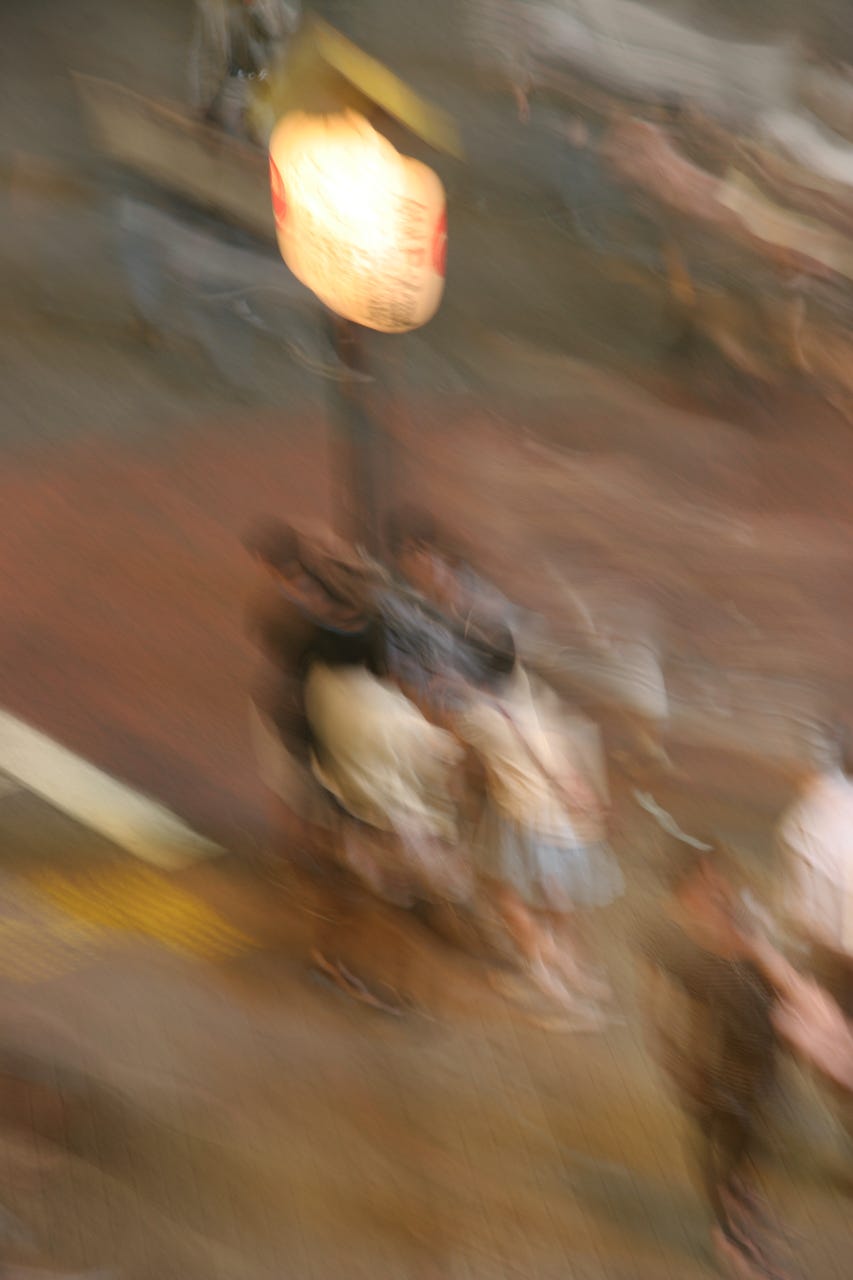
Of course, Moriyama’s mode of representation is photography and its history is different from the one I write with words. It depicts expressions of the world with something that goes beyond words: images. Any person of words, like me, should keep a copy of Moriyama’s Shinjuku close at hand.
Koji Taki, “The Myth of the City”

But O that I were young again
And held her in my arms.
W. B. Yeats, “Politics”
commentary
“La modernité, c’est le transitoire, le fugitif, le contingent,” wrote Baudelaire in his essay “The Painter of Modern Life,” published in 1863. Sociologists have taken this to define what in their view is distinctive about “the modern era,” forgetting Baudelaire’s qualification that modernity is only one “half of art, whose other side is the eternal and the immutable. Every old-time painter had their own modernity.”
The artists and photographers I refer to here—Miroslav Tichý, Mikuláš Medek and Emila Medková, Daido Moriyama and the photographers of the Provoke group—all in one way or another address this duality in their work.
The Medeks were members of the underground Prague surrealist group formed around Karel Teige in the early 1950s.
Miroslav Tichý, who achieved fame only in his eighties, was the ultimate voyeur. He obsessively photographed the women of his little Moravian hometown Kyjov with home-made cameras that his subjects, who thought him a harmless eccentric, didn’t realize worked. Despite—or maybe because of—their technical imperfections, his images have an undeniable beauty akin to that of the Japanese photographers’ are–bure–boke (grainy, blurry, out-of-focus) aesthetic.
I took these photos in Tokyo, mostly in the Harajuku area. Maybe I was affected by the city’s genius loci. As with many other images in this book, they invite us to reconsider what is real, what is imagined, and what is beyond.
 Camera lucida
Leave a comment